


History
Bratteide – The story of a vibrant trading and coastal community on Flatråker
The history of Bratteide and Flatråker is closely linked to the people who built up trade, communication and jobs along the sea. At the center is the couple Karin Oline ("Lina") and Jakob Olai Fagerbakk, who laid the foundation for a small but vibrant trading community on Tysnes.
Eurasian Skylark Photo Per Gjærder
The early years – a trading house takes shape
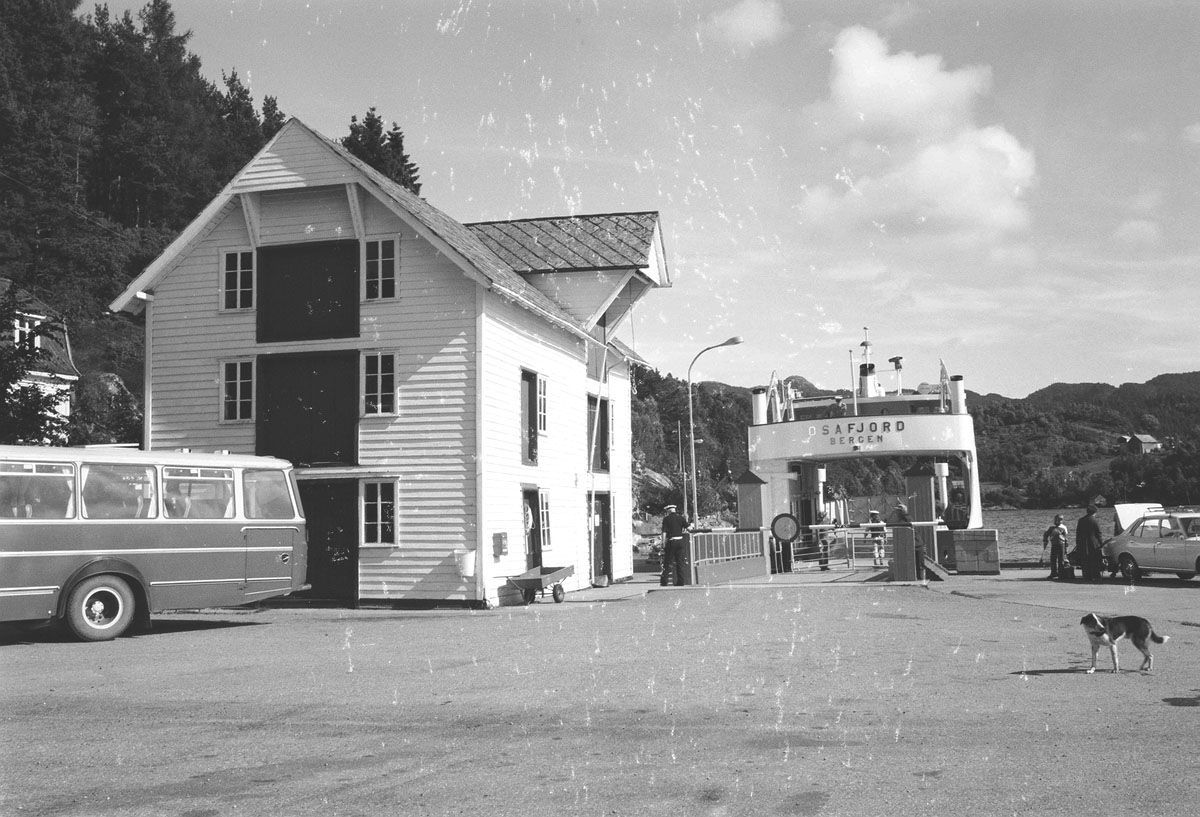
The trading house at Flatråker was built as early as 1904, when Tobias Tobiassen built the house in Ølversvika on the north side of the Flatråkerelva River and started a shop there. Around 1909, the entire building was moved to its current location. The following year, the post office also opened for the first time.
The Fagerbakk family takes over
Jakob Olai was a sea captain before he settled down as a merchant. In 1912 he bought the farm at Bratteide and the trading post at Flatråker from Tobiassen. Here he ran a shop, post office, telephone station and steamship expedition – and quickly took on more tasks that the village needed.
Lina was in charge of the general store along with several other female employees. The store was the good old-fashioned kind: here you could get everything from clothes and suits to paint and groceries.
Bakery, herring and work for many
As early as 1913, Jakob Olai started a bakery at Flatråker, with Aksel Sundal as the baker until the Second World War. In 1916, he built a salting shed, and herring fishing became a big business. At its peak, up to 5,000 barrels of herring were salted a year, which provided work for many in the village.
Telephone, commercial buildings and new buildings
In 1919, Flatråker got its first telephone exchange, partly financed by Jakob Olai himself. In the same year, he expanded and modernized the house as it stands today. Shortly after, he also built a service house for his own workers connected to the household and the sawmill as well as other businesses in the interwar period. The house became known as "Tausehuset" or "Vaskehuset"
In 1921 he started barrel production in an old shipyard, and in 1924 a proper wharf facility was built.
Generational change
In 1940, his son Halstein Fagerbakk took over the trade and shipping from his mother Lina. His sisters, Jenny Karoline Fagerbakk and Elisabeth Fagerbakk, took over the mail and telephone.
In 1977, Halstein's son, Øyvind Fagerbakk, took over the operation. He closed the business in 1984. Eventually, his brother, Steinar Fagerbakk, took over the place, while Flatråker Handel AS and Berit Skår Lid took over the operation of the store.
When the ferry stopped calling at Flatråker in 1994, most of the customer base was lost. It became impossible to keep the shop running and it was closed down the same year.
Flatråker Ferry Pier – temporary for almost 30 years
Flatråker was long an important hub for boat traffic. The steamship "Haavik" ran the rural route between Tysnes and Stord, taking three hours to complete the round trip via Børtveit, Nordhuglo, Sør-Huglo, Agdestein and Leirvik.
In 1965, ferry traffic between Jektevik in Stord and Flatråker began with the MF "Rosendal" as the first ferry on the route. The pier at Flatråker was intended as a temporary solution, but remained standing for almost 30 years before the Hodnanes ferry pier finally opened in 1994. The same year, the Flatråker ferry pier was closed.
The disused ferry hatch now stands empty and unused. In 1996, Steinar Fagerbakk bought the land and built a boathouse on it the same year.
Closed ferry pier – New era begins at Flatråker
After the store closed down, the property was sold to Leif Oddvar and Hild Sundal in 1995. The couple made major changes to the interior and converted the house into holiday apartments, which became very popular, especially for German fishing tourists.
There will be good activity after the renovation and many German guests, both regulars and new, will visit Flatråker over the next 20 years.
Decline, new owners and new courage
Leif Oddvar passes away after a period of illness and the buildings stand empty and unused for several years. Maintenance is limited and decay progresses rapidly in the harsh western weather.
Flatråker is put up for sale in the fall of 2024, we go to a viewing and immediately fall in love with the place. In the winter of 2025 we decide and buy the place we now call Flatråker Brygge. Now the work begins to rebuild the place and once again welcome new guests from home and abroad to beautiful Tysnes and Flatråker
Sources: Tysnes Sogelag and https://www.akkuratd.com/